Table of contents ▸
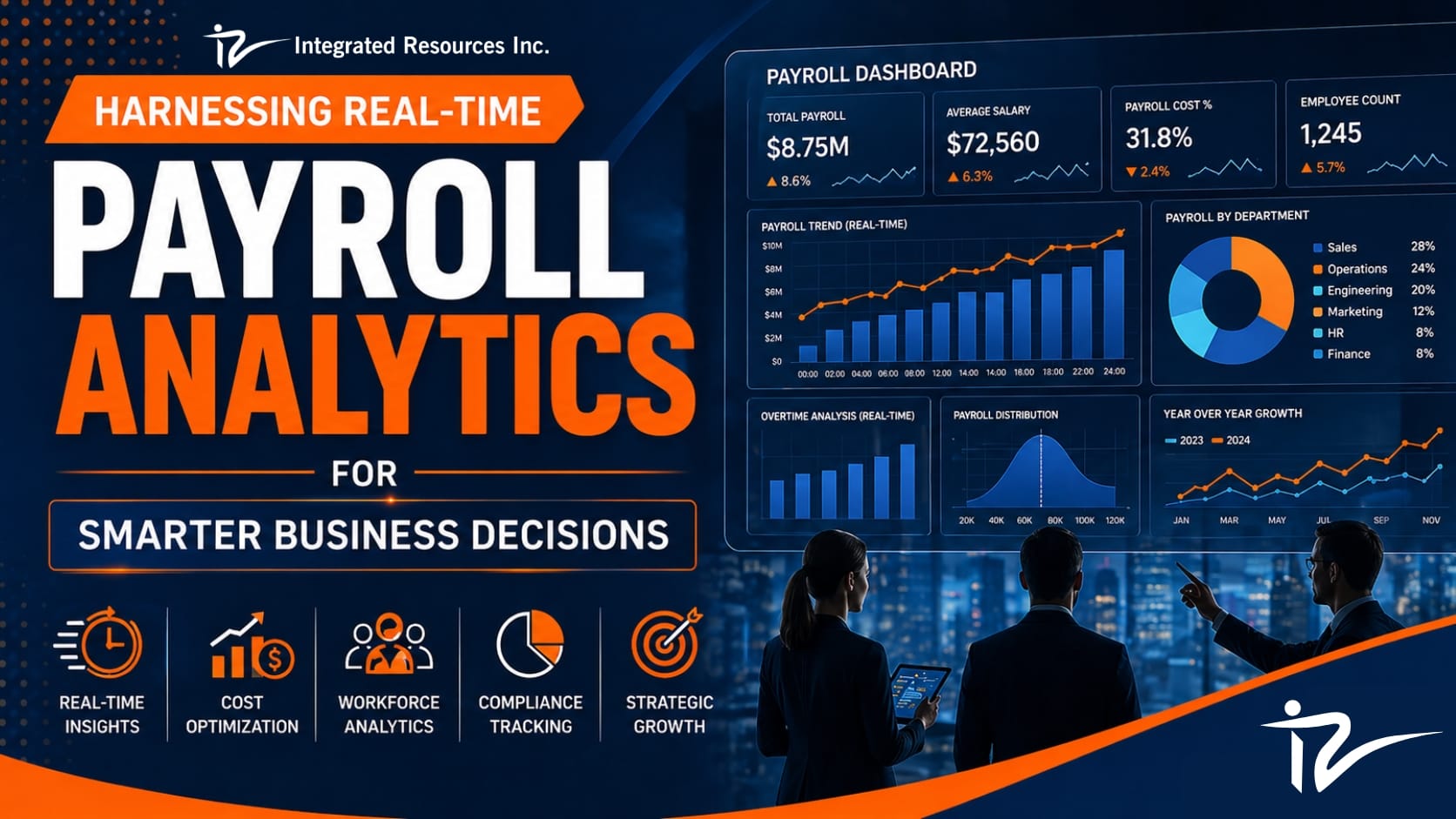
In today’s ever-changing business environment, business leaders still experience a constant rush to make much faster and accurate decisions. One such area where payroll management is of the essence. Payroll is about more than just the on-time payment of its employees. It is about compliance, cost considerations, workforce satisfaction, and the effective alignment of resources of the business. With the breakneck pace of technological advances, companies are now able to make use of payroll analytics by real-time data; the seconds of decision-making have sped up infinitely.
As per HR outsourcing reports, 57% of the companies outsource at least one human resource function, with payroll services holding the top seat in 70% of the contracts. The reasons are clear: organizations want remission from payroll, assurance of accuracy, and expert advice. Outsourcing with a real-time analytical layer means exactly what companies wanted-error-free processing plus meaningful cross-organization insights for growth.
The Significance of Real-Time Payroll Analytics
Transforming Payroll into a Strategic Business Tool
In traditional roles, payroll has been carried out as a back-office function, ensuring compliance and payments only. Previously, payroll was deemed a back-office administrative function focused on compliance and payments. Payroll analytics has now elevated it to a strategic level. Using real-time information, organisations can monitor workforce trends, labour costs, and overtime utilization. This allows HR professionals and business owners to enhance their decisions so as to positively impact income and productivity.
For example, real-time payroll analytics can detect trends where overtime costs are highest for one department or compliance risks are increasing in a territory. Upon finding such information, the leadership can implement corrective actions, such as adjusting staff levels, re-aligning schedules, or rolling out training programs. In essence, payroll will no longer wait to respond. In short, the payroll profession has grown from being reactive to being proactive.
Managing Labour Costs Effectively
One of the most significant benefits real-time data provides is a chance for cost control. Payroll might be the biggest cost in an organisation, and a slight inefficiency going unnoticed might translate into huge losses as time goes by. Payroll analytics permits companies to track shifts and overtime hours, absenteeism, and contractor usage.
An increase in overtime hours might occur suddenly within a department. If there’s no real-time data, managers won’t realize the problem until after the payroll has been processed, thereby losing a lot of time and money. But, with advanced payroll analytics, alerts can identify the inflation right away, allowing managers to reallocate workloads or even hire extra temporary. Having this level of flexibility can maximise resources to keep costs down.
Key Benefits of Real-Time Payroll Analytics
Enhancing Decision-Making with Predictive Insights
The most significant opportunity a company can gain from payroll analytics is that it can transform raw numbers into usable insight. Most current payroll platforms will enable dashboards, visual reports so that leaders can see not only what is happening now, but even what may occur in the future. For example, wage expenses can be forecasted; the potential for turnover risks can be modeled; the impact of policy changes can even be analyzed and projected through predictive models.
For example, suppose absenteeism in some teams is found to be on the rise after reviewing the real-time data; in that case, the HR department may decide to roll out engagement programs to prevent a drop in productivity. Expenses related to salary can be forecasted with great accuracy, helping CFOs in determining an appropriate budget allocation for long-term sustainability of the business. Meaning that decision-making becomes more clear-cut and based on evidence, with only a little room left for speculation.
Ensuring Compliance and Reducing Risks
Errors in payroll, or lapses in compliance, can lead to penalties, attrition, and worse still, harm to the organization’s reputation. Payroll analytics can identify mismatches within minutes or in real time, allowing correction for tax withholdings, overtime violations, or missed tax filings, for example.
Laws are constantly changing, making real-time compliance monitoring an aircraft to always remain audit-ready-a must for anyone operating globally with a diverse labour law framework. The presence of payroll outsourcing combined with analytics means compliance is not just a reactive thing; it is being continuously watched and proactively managed.
Better Employee Experience Earned Wage Access
Moving forward from compliance and cost control, the modern payroll system is also promising a better employee experience. According to Paychex’s 2025 trend report, the use of earned wage access is growing, letting employees actually access their wages before payday. While monitoring the use of features of the software act and looking at the usage trends in the context of payroll analytics, these types of actions will help employer organisations understand what their workforce needs and develop better employee engagement.
A well-satisfied workforce is more passionate, productive, and loyal. By aligning real-time data with employee benefits, organizations can help bolster retention strategies, thus reducing turnover costs. Ultimately, this breeds an ambience where payroll is no longer a mere transactional activity; instead, it drives employee wellbeing.
Analytics for Informed Business Decisions
From Payroll Data to Business Forecasting
Payroll analytics are assessed with HR systems and wider financial systems to have a basis for strategic planning. Organizations can measure the costs associated with the workplace, productivity, and attrition against overall business goals, enabling leadership teams to run ‘what-if’ scenarios such as conceptualizing the impact of salary increases or expanding the workforce.
Combining payroll classifying model forecasts with ‘what if’ scenarios may also better prepare organizations for the uncertainties. Whether it is a spike in demand from nowhere, a new compliance umbrella, or economic challenges thrown in one’s way, real-time data arms businesses with foresight for quick adaptations.
How Outsourcing Plays a Role in Analytics
Many businesses lack internal staff that can really tap into payroll analytics. Enter payroll outsourcing providers; these companies, partnering with payroll providers who can guarantee accuracy, compliance, and technology-driven solutions, can let their clients focus on their core operations while opening up advanced analytics capabilities.
At IRI, stress-free payroll and forecast accuracy guarantee clients flawless payroll runs and meaningful insights for smarter decision-making.
Conclusion
With real-time data, payroll analytics have transitioned payroll from a mundane affair into a strategic business tool that helps leaders to control costs, remain compliant, uphold employee satisfaction, and project with precision toward development. Importantly, through the combination of payroll outsourcing partners, suppliers get the very best of both worlds: peace of mind and a competitive edge.
In the face of fast-changing market dynamics, the ability to implement accurate data almost in real time could be the key factor that forestalls long-term success for these businesses. The adoption of real-time payroll analytics is no more a question to be considered, it is a must! Organisations make use of this technology to not only optimise payroll but also set themselves up for success in a competitive market.
Follow our social media sites for more job listings, workplace news, and information on how smart payroll solutions can influence future work.
Follow us on Social Media: LinkedIn | Facebook | Twitter | Instagram | YouTube