Table of contents ▸
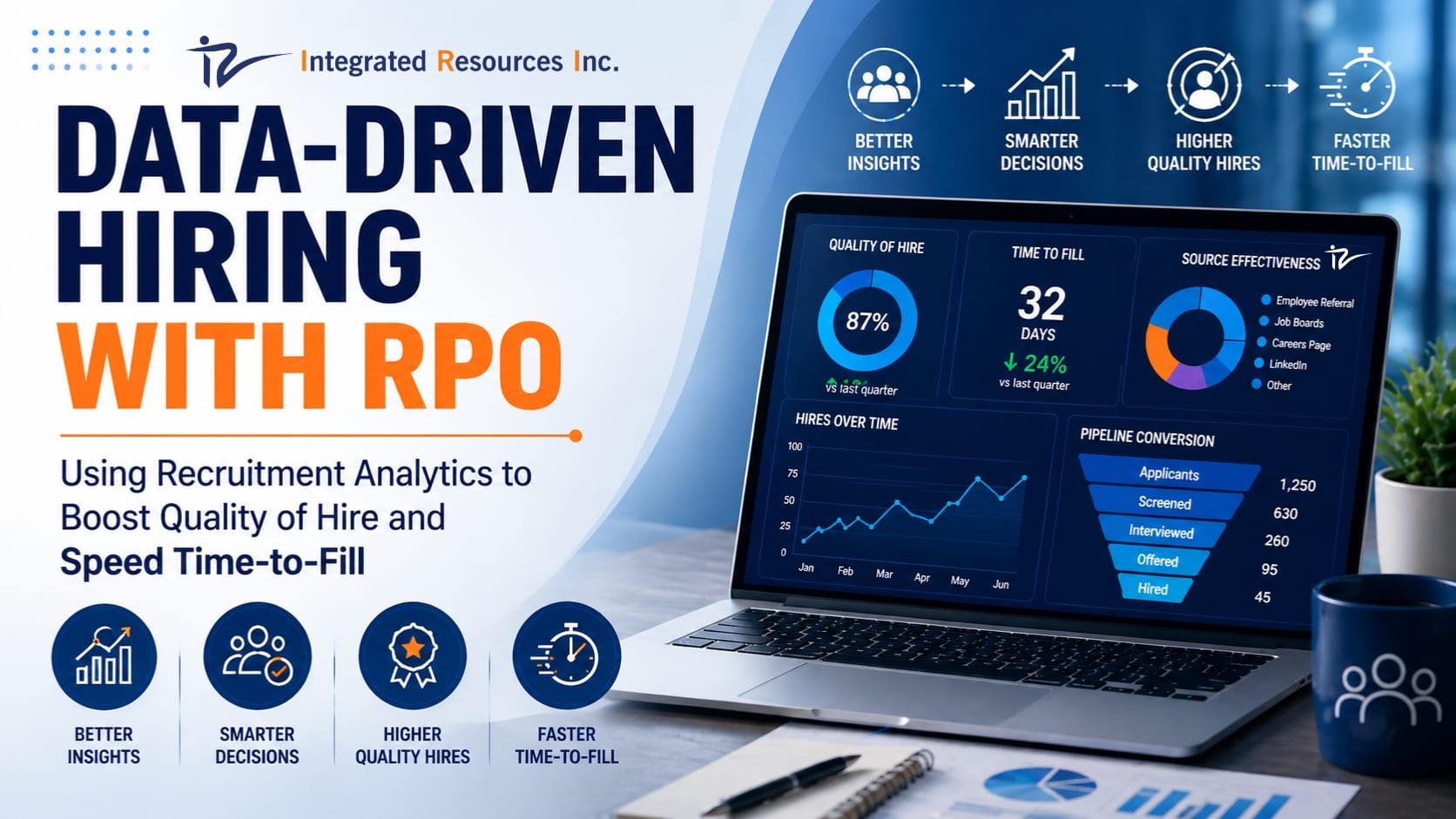
In a world that changes swiftly, data driven hiring has never been more important for making the right hire. Organisations, increasingly, turn to data analytics to strengthen their recruitment strategy; to the end that the right talent is hired in a way that is both efficient and effective. RPO providers like IRI maintain a strategic balance between a high-touch approach and the very latest technology to deliver measurable results. In turn, and with the aid of analytics, RPO Solutions present a way for businesses to increase the quality of hire, speed up time-to-fill, and establish a much more scalable and predictable hiring process.
Modern Recruitment with Data Analytics
The traditional recruitments have relied on intuition, gut feeling, or limited experience of hiring that often result in inconsistent outcomes. On the other hand, data analytics brings in a scientific approach with the goal of making recruitment a competitive advantage. By analyzing historical hiring data, candidate performance metrics, and market trends, RPO providers now have deep insight into what constitutes an ideal hire. The data gleaned from analytics thus flows into each step of the recruitment strategy, from sourcing to the final selection.
With RPO, hiring decisions are reviewed on the long-term impact to organizational performance in terms of metrics such as retention, productivity, and culture. Because RPO teams can measure the trends of quality of hire to organizational performance metrics, they can compare patterns of those components of organizational performance. For example, performing predictive analytics to discover which candidate variables are associated with higher performance allows hiring managers to make decisions on sound data rather than just by using an interview and a resume.
The use of data analytics further smoothens the sourcing process in determining where to locate top talent. By analyzing the number of candidates produced from each platform and identifying which one provides the best candidates, RPO providers can not only optimize recruiting strategies but also decrease the cost per hire, ultimately improving overall efficiency. Such precision in the recruitment process makes sure opportunities are not wasted by the organization and that the talent sourced can usher in business growth.
How RPO Improves Quality of Hire Through Data
The recruitment outsourcing service providers utilize a certain structured and data-driven approach to ensure quality of hire. With the insertion of data analytics into the recruitment process, these providers ensure that hiring is not just fast but smart. The various ways RPO improves the quality of hire can be detailed below:
Candidate Scoring and Ranking
Predictive systems used by RPO providers score candidates for skills, experience, and culture fit. Recruiters are able to objectively assess candidates with assigned scores and ranks, allowing them to focus on a short list of qualified candidates, which can ultimately reduce bias and lead to better hiring results.
Performance Metrics Alignment
RPO teams set recruitment criteria aligned with business objectives through the use of data analytics. By analyzing the prior employee performance data, they pinpoint traits that interface successfully with long-term success so that new hires will serve those organizational goals well.
Continuous Feedback and Improvement
RPO Solutions depend on continuous feedback about the quality of hires and ongoing analysis of hire outcomes in order to improve processes. The bursary numbers like interview-to-offer ratio, induction, and retention-fed data analytics are really put in the hands of recruiters so they keep on improving their recruitment strategy, and thus better the quality of hire.
Streamline the Ability to Make Decisions
By maintaining a focus on data, they can deliver actionable insights that underlie those difficult hiring decisions. The hiring managers are no longer judging candidates in quasi-objective isolation, but rather following the trajectories of the many candidates on the dashboards with a lot of analytics and codes, promoting transparency, objective criteria, and speed in hiring.
Predictive Workforce Planning
RPO teams can analyze past data and market trends and apply that learning to anticipate hiring demand, forecast skill shortages. This predictive approach pushes quality of hire to even better levels, ensuring that organizations have a pipeline ahead.
Implementing a Data Driven Hiring Recruitment Strategy
When shifting towards analytics-fueled recruitment and data driven hiring, a few strategic steps come into play for any organization that needs to be considered:
- Data Collection: Gather all-inclusive candidate and employee data for data driven hiring, including resumes, interview feedback, performance measurements, and retention records.
- Integration: With advanced HR software and analytics tool sets, there is a holistic experience of all recruitment information, centralizing all the data for further relevance and accessibility.
- Analysis and Insights: Predictive and descriptive analytics now allow visibility into quality of hire trends or patterns in sourcing candidates, screening criteria, and onboarding to support smarter data driven hiring decisions.
- Decision Support: Hiring managers were given visually actionable reports and dashboards, which created a way to take the guesswork out of candidate selection who move the goal post.
- Continuous Monitoring: Adopting a continuous monitoring and evaluation of the outcomes of hire allowed for the continuous improvement of strategies and processes, and maintained quality-of-hire efforts.
By taking these steps proactively, organizations can convert recruitment into a data-operating machine that performs consistently. RPO providers such as IRI bundle these best practices with high-completion delivery and support to make every hire intentional, thoughtful, and meaningful.
Advantages of a Data Driven Hiring Strategy
A data-driven mentality towards recruitment analytics provides organizations with a wide range of benefits.
- Greater Hiring Accuracy: Using data-based insights removes discretion or subjective judgment from the hiring manager’s world to better place candidate capability with job requirements.
- Higher Retention Rates: Identifying who has a high success potential and is most likely to stay increases success, allows organizations to reduce turnover, and saves related costs.
- Help Time and Cost Efficiency: By optimizing sourcing and screening, time-to-hire and/or recruitment costs can be reduced while maintaining the quality of hire.
- Strategic Workforce Planning: Workforce analytics allows organizations the opportunity to plan for future talent needs, understand their skill gap, and have a better impact on making hiring decisions.
- Continuous Improvement: Assessing data continuously allows the recruitment methods to be enhanced as market needs change, and keeps the organization competitive.
All these benefits equip RPO provides to assure organizations will ultimately not only hire but hire talent that will help sustain growth, foster innovation, and support the company’s long-term success.
Conclusion
The new world of talent demands far more than mere intuition. Together, employment data support an informed selection process, creating a fine quality hire and recruiting leverage of investment earned. Case-wise, data analytics enable an agency to gain actionable insights to simplify the hiring process, align recruitment with business objectives, and grow the level of workforce performance. The RPO Solutions fill the gap between data and decisions through their high-touch, end-to-end approach, and, while doing this, the solutions provide businesses of all sizes with measurable results.
Hiring based on analytics is not only to fill mindless vacancies, but to build sustainable, efficient, and high-performing workforces. These companies will boast this approach in navigating the complexities of talent acquisition while staying ahead of their market trends.
Follow us on Social Media: LinkedIn | Facebook | Twitter | Instagram | YouTube