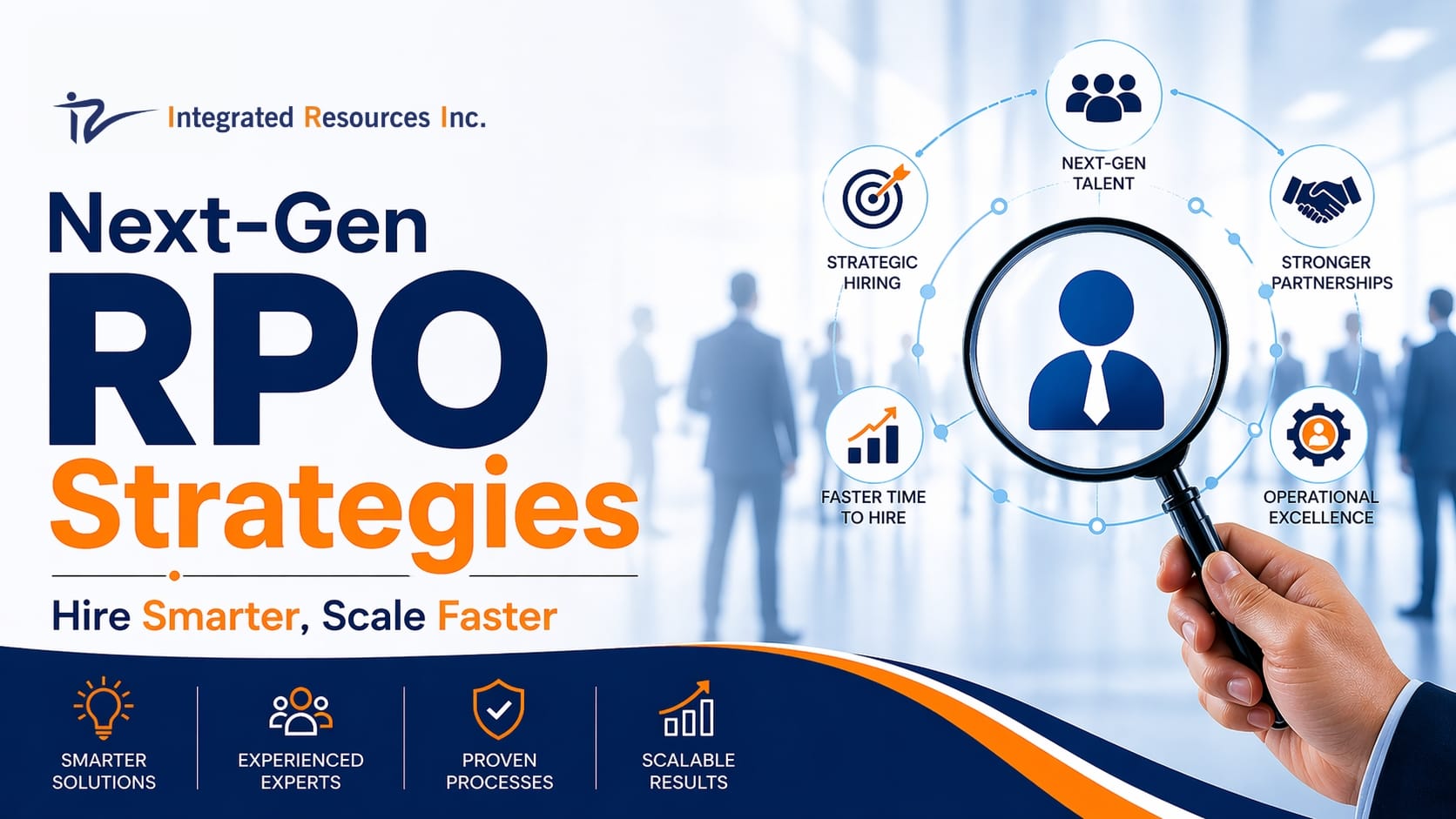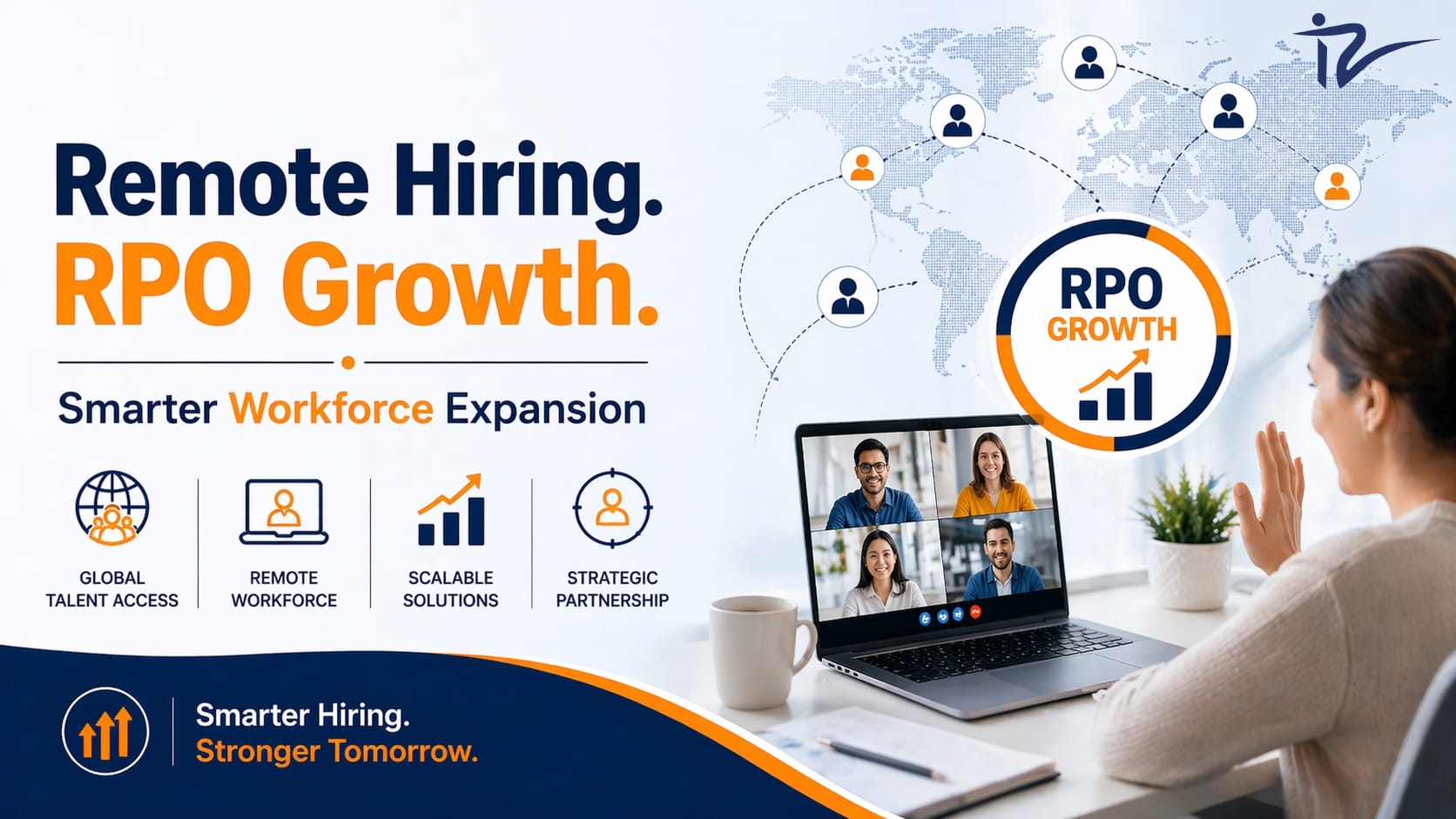

In today’s unpredictable business world, talent acquisition is being presented with unknown levels of challenges. Economic fluctuations, business needs becoming fluid, and technologies being faster than usual have not really allowed traditional methods of recruitment to be adequate. In response to the uncertainties present in the business environment, organisations are now embracing RPO Solutions that offer flexibility in scaling, collaboration, and delivery of the process of hiring.
The Need for Scalable Recruitment in Volatile Markets
Markets today are anything but predictable. Until such time that a company sustains a shift in consumer behaviour, technological disruption hits one or the other sector of manufacturing and trading, a global economic trend keeps an aftereffect on workforce requirements-a matter of nearly an overnight change-Adjustment in recruitment strategy becomes mandatory for such an organisation in light of its demand in the present.
By recruitment scalability, a company ensures that it is able to adjust the volume of hiring, without impacting quality or timelines. In other words, rather than establishing an in-house HR team permanently, organisations leveraging RPO solutions will have an external expert and resources at their disposal for recruitment that can be scaled up or down, as per need. This approach is quite instrumental in cutting down costs, while keeping talent acquisition nimble enough to let organisations respond well to changing market conditions.
While the incumbent recruiters lack in technology and experience that an RPO solutions provider brings with it, the latter and former have resisted the actual use of data analytics in targeted acquisition; there are times when there is the implementation of advanced applicant tracking systems and predictive analytics that enable an organisation to confirm high-quality hires and sometimes questionable conditions. Whatever the means required host should have an adaptive delivery so that recruitment can stay in line with the shifting priorities of business, so the teams can be kept just fine and efficiently without resources going to waste.
How Flexible Collaboration Changes Hiring Outcomes
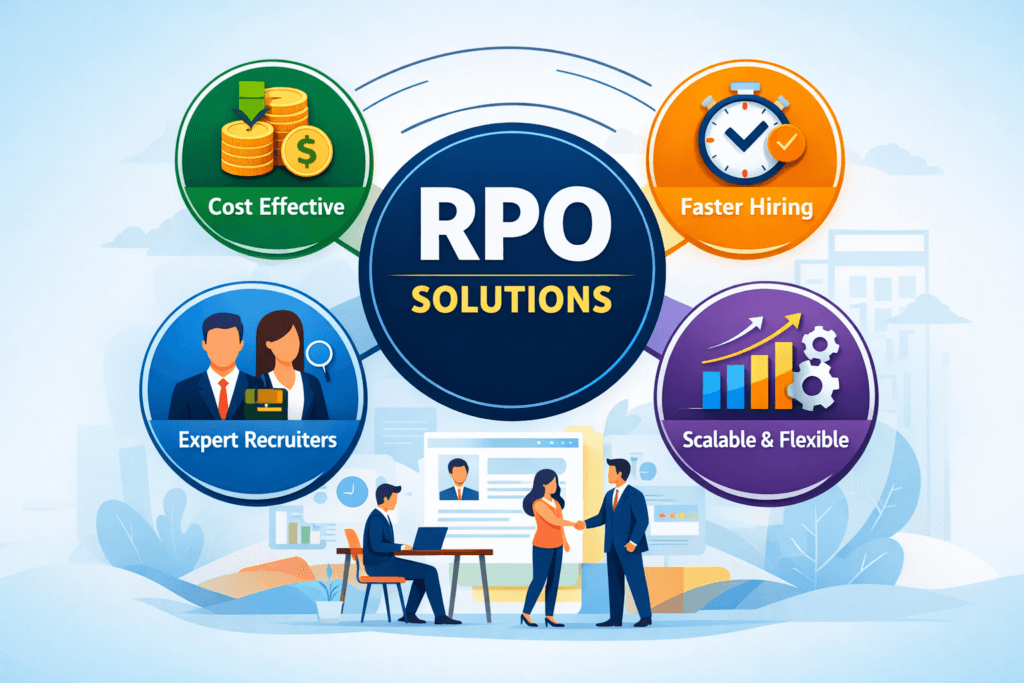
Flexibility is what an RPO solutions provider offers to a client for collaborative intent. It works on systems, processes, and technical expertise in concert with internal HR.
This way, organisations can select and implement tailored recruitment strategies that best suit their specific needs. Whether it is sourcing niche talent, handling bulk hiring drives, or managing seasonal workforce fluctuations, RPO solutions Providers offer a tailored approach for improved efficiency and effectiveness. Teams put together hiring plans, keep real-time data shared between them, and adjust strategies as the focus of the business changes.
On the other hand, flexible collaboration allows knowledge transfer between the client and RPO solutions team, cementing a long-term partnership that enhances internal recruitment capability. Combining internal know-how with external expertise means the organisation will be able to realise agile and resilient processes, working out the bottlenecks and speeding time-to-hire with a great candidate experience: now being a major differentiator in competitive talent markets.
Leveraging Technology for Adaptive Delivery
In turbulent markets, speed is at a premium, and so is precision. Therefore, RPO solutions providers are utilising cutting-edge technologies with increasing frequency: AI, automation, and predictive analytics to develop adaptive recruitment solutions. These facilitate the less creative tasks, hence allowing hiring managers to pick the best possible talent, and guide decisions by giving meaningful data.
Speed is one part of adaptive delivery. The other aspect has to do with matching recruitment to real-time needs-individually. For example, AI-driven sourcing would be able to dishwash candidates to roles with increased accuracy. Analytics tools, on the other hand, can forecast hiring trends and direct resource allocation accordingly. This will reduce the number of administrative tasks while opening up internal resources for other strategic initiatives such as branding and candidate engagement.
The technology-driven approach makes the recruitment process resilient despite the circumstances being unpredictable. They offer organisations the option of working in a scalable and non-restrictive environment while giving the candidates a streamlined, transparent, and customer-centric recruitment experience at the other end
The workforce gains in competence as well as in alignment with the fluid goals of the company.
RPO as a Strategic Partner for Business Growth
RPO Solutions offer a direct fix for a company’s immediate hiring needs and engage the firm in systems affecting broader business objectives. Through data-driven insights and workforce planning capabilities, an RPO solutions provider supports an organisation in the optimisation of talent pipelines and enhancement of workforce productivity. Scaling features, flexible collaboration, and adaptive delivery ensure that hiring strategies respond to developments in the market while anticipating talent gaps well ahead of time when such discrepancies affect operations.
Further, engagement with RPO reduces operational risks stemming from fluctuating hiring demand levels. Companies can retain their quality and compliance standards consistently throughout their recruitment process, addressing issues such as attrition, shortages of skills, or market disruptions. Thusly, the strategic alignment allows for the long-term growth of an organisation, remaining agile under the uncertain state of operations.
RPO partnership brings in cost efficiency as well. By leveraging their own competencies in conjunction with external resources, companies successfully diversify and narrow their scope, typifying budgets, actually shortening time-to-hire, and permitting internal HR teams to focus on value-add actions. This provides a viable and measurable ROI and facilitates repeatable performance over time while enhancing the organisation’s competitive advantage in acquiring and retaining talent.
Implementing Best Practices for RPO Success
To increase and maximise the possibilities that RPO offers, companies must use the following best practices:
- Resources: Agree with your RPO solutions partner on where there are clearly defined areas, i.e., workforce planning, hire priorities, and expectations, so that key performance indicators can be agreed.
- The Right Partnership: Choose the RPO solutions that brings proven past performance history, relevant technological advancements, and industry knowledge.
- Collaboration: Openly collaborate with your team and work together as seamless RPO solutions consultants.
- Technology: You should be open to embracing AI as part of the use of technology, throughout the recruitment process, automation, and analysis aspects of decision support.
- Monitor and Adjust: Continually evaluate recruitment performance metrics and decide on adjustments dictated by the changing market and timescales.
By adhering to these practices, organisations can harness all the benefits emanating from scalability, flexible collaboration, and adaptive delivery, ensuring that recruitment processes remain solid, responsive, and strategically aligned.
Conclusion
In markets where volatility and uncertainty exist, a traditional recruitment approach is mostly incapable of meeting the organisational needs. Recruitment Process Outsourcing is a promising yet dynamic space that combines scale, flexible collaboration, and adaptive delivery of talent in an efficient manner. In the end, organisations, by the use of external expertise, good technology, and collaborative working, can be flexible and resilient against operational risks that may negatively impact the overall output of the workforce.
RPO is no longer considered a mere support function but rather a strategic partner in scaling hiring activities per business growth, fathoming talent gaps, and responding to market fluctuations. Partnered with the right company, businesses can develop and strengthen recruitment frameworks that seamlessly knit into organizational goals and long-term vision.
Follow us on Social Media: LinkedIn | Facebook | Twitter | Instagram | YouTube